Indian · Main
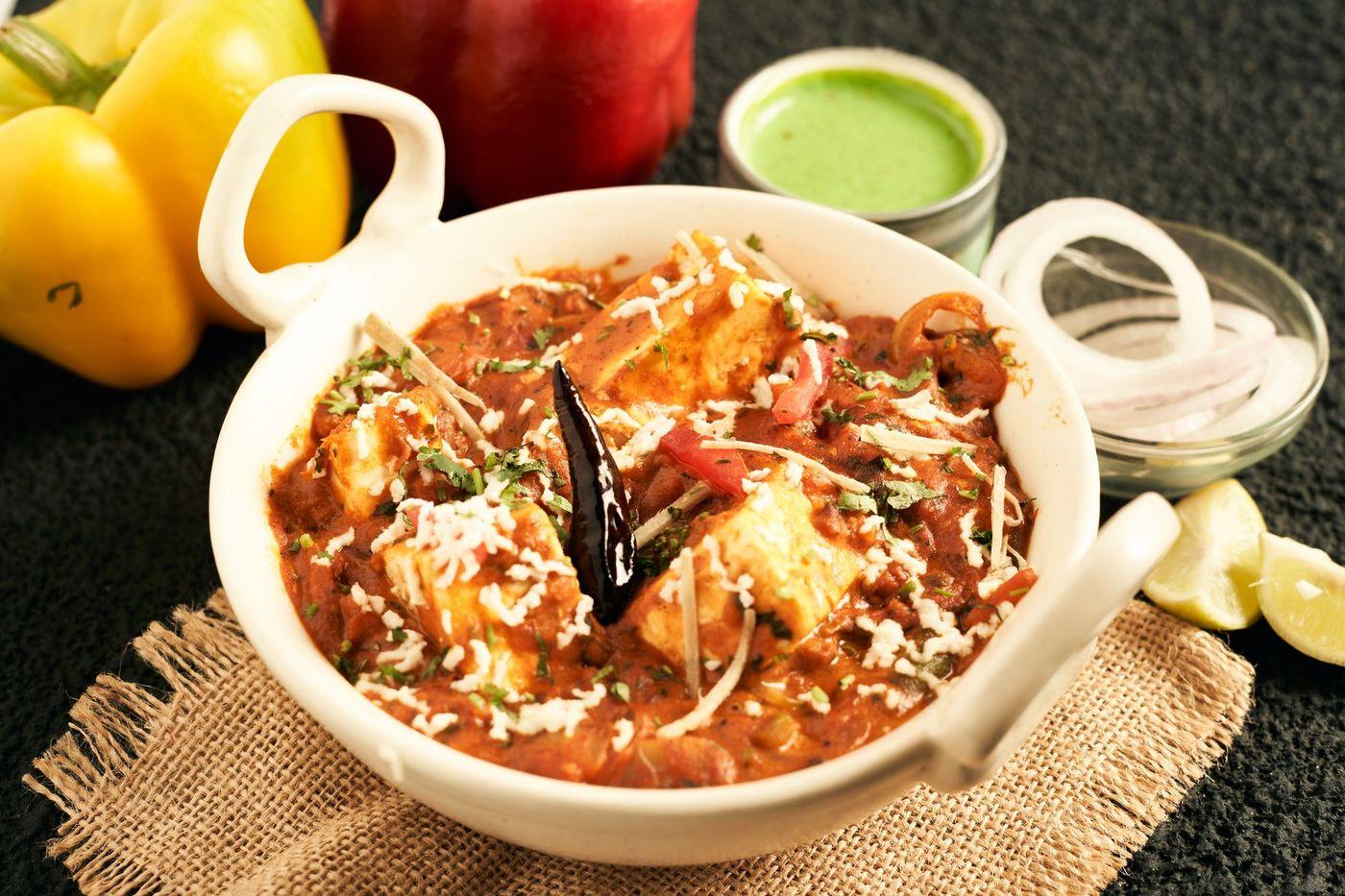
Paneer Lababdar
Paneer in a rich tomato and cashew gravy
Restaurant-style Punjabi paneer: cubed and grated paneer simmered with milk in a cashew, melon-seed and tomato gravy.
395kcal per serving, as written
The biggest sources are paneer (33%) and oil (16%). Set your target below and we'll rescale it.
- Punjab, North India
- 50 min
- Vegetarian
- medium
Adapted from a recipe by Neha Mathur, Whisk Affair (whiskaffair.com)
Source and data
Adapted from “Paneer Lababdar Recipe” by Neha Mathur (Whisk Affair (whiskaffair.com)), accessed 2026-11-24. We use this published recipe as a reference for the dish's ingredients, proportions and technique. The method on this page is written by A Light Hand, and the original author hasn't reviewed or endorsed this adaptation. Nutrition figures are estimates, and the calorie-adjusted versions haven't been kitchen-tested. Published servings: 6.
Something off with this recipe? Tell us
How we sourced and calculated this
The publisher lists 442 kcal and 14 g protein (per serving, as published). Our figures are recalculated from USDA reference data and may differ.
Region: Punjab, North India (as described by the recipe source).
How we read this recipe
- The source calls it a North Indian restaurant curry. Nothing here is deep-fried or stir-fried.
- Green chilies are given chopped (2 tsp + 1 tsp); we count them as about 1½ chilies (estimate). Melon seeds are counted as USDA dried watermelon seed kernels.
- The paste is cooked down with about 1 cup of water and blended with ½ cup more. Kasuri methi and whole spices aren't counted.
Estimated weights
- Ginger, chopped: 2 × 2 g per tsp (chopped ginger, about 2 g per teaspoon) (estimate).
- Green chilies, slit: 1.5 × 5 g per green chili (small Indian green chili) (estimate).
- Cashews: 9 × 1.6 g per kernel (FDC 170162) (estimate).
- Garam masala: 0.5 × 2 g per tsp (FDC 2525305) (estimate).
Data notes
- Paneer IFCT 2017, code L003. Measured in India across six regions. Paneer composition varies widely: this table lists 12.4 g carbohydrate per 100 g, a US branded label lists 3.6 g, and USDA's survey entry lists 22.5 g. From the Indian Food Composition Tables 2017 (National Institute of Nutrition, Hyderabad), read from the ifct2017 data package's transcription. IFCT reports energy in kJ; converted at 4.184 kJ per kcal. Check against the printed tables before commercial use.
- Oil, canola USDA FDC 172336, SR Legacy. Used for recipes that call for unspecified neutral cooking oil.
- Spices, cumin seed USDA FDC 170923, SR Legacy. Also used for ground cumin. USDA's teaspoon weight is for whole seed.
- Spices, coriander seed USDA FDC 170922, SR Legacy. Used for coriander powder.
- GARAM MASALA (Sands Impex) USDA FDC 2525305, Branded. Spice blends vary by brand; SR Legacy has no garam masala entry.
- Spices, pepper, red or cayenne USDA FDC 170932, SR Legacy. Proxy for Kashmiri red chili powder, which has no USDA entry. Both are ground dried Capsicum; heat differs, energy is assumed similar.
Nutrition reference: USDA FoodData Central (https://fdc.nal.usda.gov) and the Indian Food Composition Tables 2017 (National Institute of Nutrition, Hyderabad), retrieved 2026-11-21. Cooking losses (oil left in the pan, marinade left in the bowl) are not subtracted, so these estimates lean high. Full method and every food record.