Indian · Main
Chhena Tarkari
Soft fried balls of fresh chhena and potato in a whole-spiced onion-tomato gravy.
179kcal per serving, as written
The biggest sources are potatoes (21%) and paneer (18%). Set your target below and we'll rescale it.
- Odisha, East India
- 50 min + 30 min marinating
- Vegetarian
- medium
Adapted from a recipe by Srivalli, Spicing Your Life (spicingyourlife.com)
Source and data
Adapted from “Chena Tarkari (Odia Style Paneer Curry)” by Srivalli (Spicing Your Life (spicingyourlife.com)), accessed 2026-11-21. We use this published recipe as a reference for the dish's ingredients, proportions and technique. The method on this page is written by A Light Hand, and the original author hasn't reviewed or endorsed this adaptation. Nutrition figures are estimates, and the calorie-adjusted versions haven't been kitchen-tested. Published servings: 4.
Something off with this recipe? Tell us
How we sourced and calculated this
Region: Odisha, East India (as described by the recipe source).
How we read this recipe
- The source calls it a popular side dish across Odisha and West Bengal, served with thunka puri.
- Chhena is fresh paneer. The source makes it from 250 ml milk; we count about 50 g of chhena (an estimate, using IFCT 2017 paneer), so this is a light curry with little cheese per serving.
- The oil for deep-frying isn't eaten in full. We count what the food absorbs, estimated at 10% of the wet batter weight (anchored to USDA's home-prepared falafel); it's marked as an estimate on the ingredient. Here it's applied to the chhena balls.
- The ground cloves, cinnamon, cardamom and bay leaf aren't counted.
Estimated weights
- Paneer, cubed: Not weighed in the source; 250 ml whole milk yields roughly 50 g fresh chhena (estimate).
- Oil for deep-frying (amount absorbed): Oil absorbed while deep-frying, estimated at 10% of the wet batter weight (about 53 g here, soaked dal counted at twice its dry weight). USDA's home-prepared falafel (FDC 172455), a deep-fried soaked-legume batter like a vada, is 17.8 g fat per 100 g against about 4 g in the raw mix, and loses about a third of its weight as water in the fryer: roughly 10 g of oil absorbed per 100 g of wet batter. Real uptake varies with oil temperature and batter moisture.
- Fresh ginger: 1 × 10 g per inch ginger (a 1-inch piece of fresh ginger) (estimate).
Data notes
- Paneer IFCT 2017, code L003. Measured in India across six regions. Paneer composition varies widely: this table lists 12.4 g carbohydrate per 100 g, a US branded label lists 3.6 g, and USDA's survey entry lists 22.5 g. From the Indian Food Composition Tables 2017 (National Institute of Nutrition, Hyderabad), read from the ifct2017 data package's transcription. IFCT reports energy in kJ; converted at 4.184 kJ per kcal. Check against the printed tables before commercial use.
- Oil, canola USDA FDC 172336, SR Legacy. Used for recipes that call for unspecified neutral cooking oil.
- Spices, cumin seed USDA FDC 170923, SR Legacy. Also used for ground cumin. USDA's teaspoon weight is for whole seed.
- Spices, pepper, red or cayenne USDA FDC 170932, SR Legacy. Proxy for Kashmiri red chili powder, which has no USDA entry. Both are ground dried Capsicum; heat differs, energy is assumed similar.
- Spices, coriander seed USDA FDC 170922, SR Legacy. Used for coriander powder.
Nutrition reference: USDA FoodData Central (https://fdc.nal.usda.gov) and the Indian Food Composition Tables 2017 (National Institute of Nutrition, Hyderabad), retrieved 2026-11-21. Cooking losses (oil left in the pan, marinade left in the bowl) are not subtracted, so these estimates lean high. Full method and every food record.
More like this
All paneer →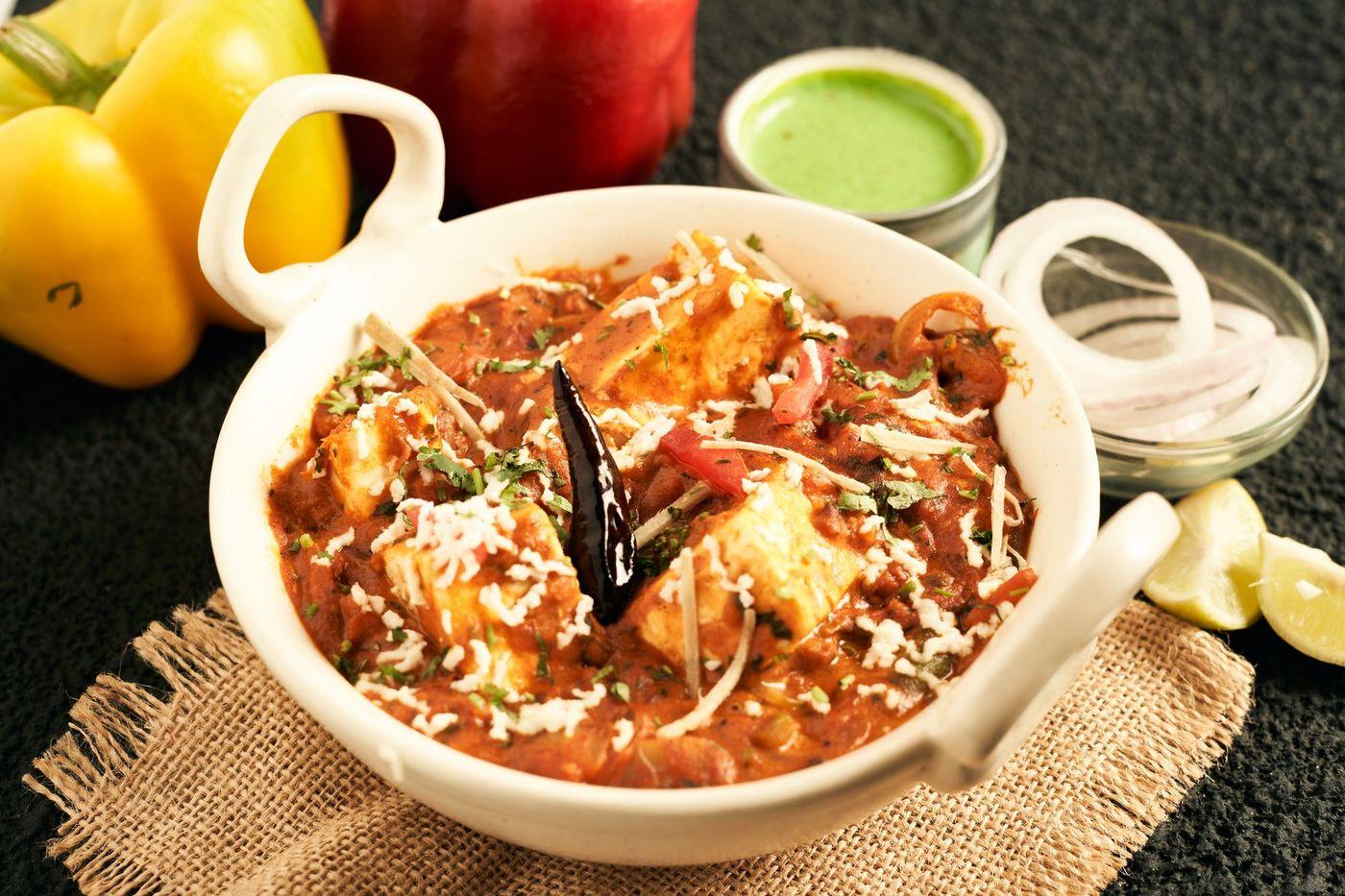
Punjab · Indian
Kadai Paneer
Paneer and peppers in a gravy built on freshly ground kadai masala.
268 kcal13 g proteinTime:35 minVegetarianPer serving.
Punjab · Indian
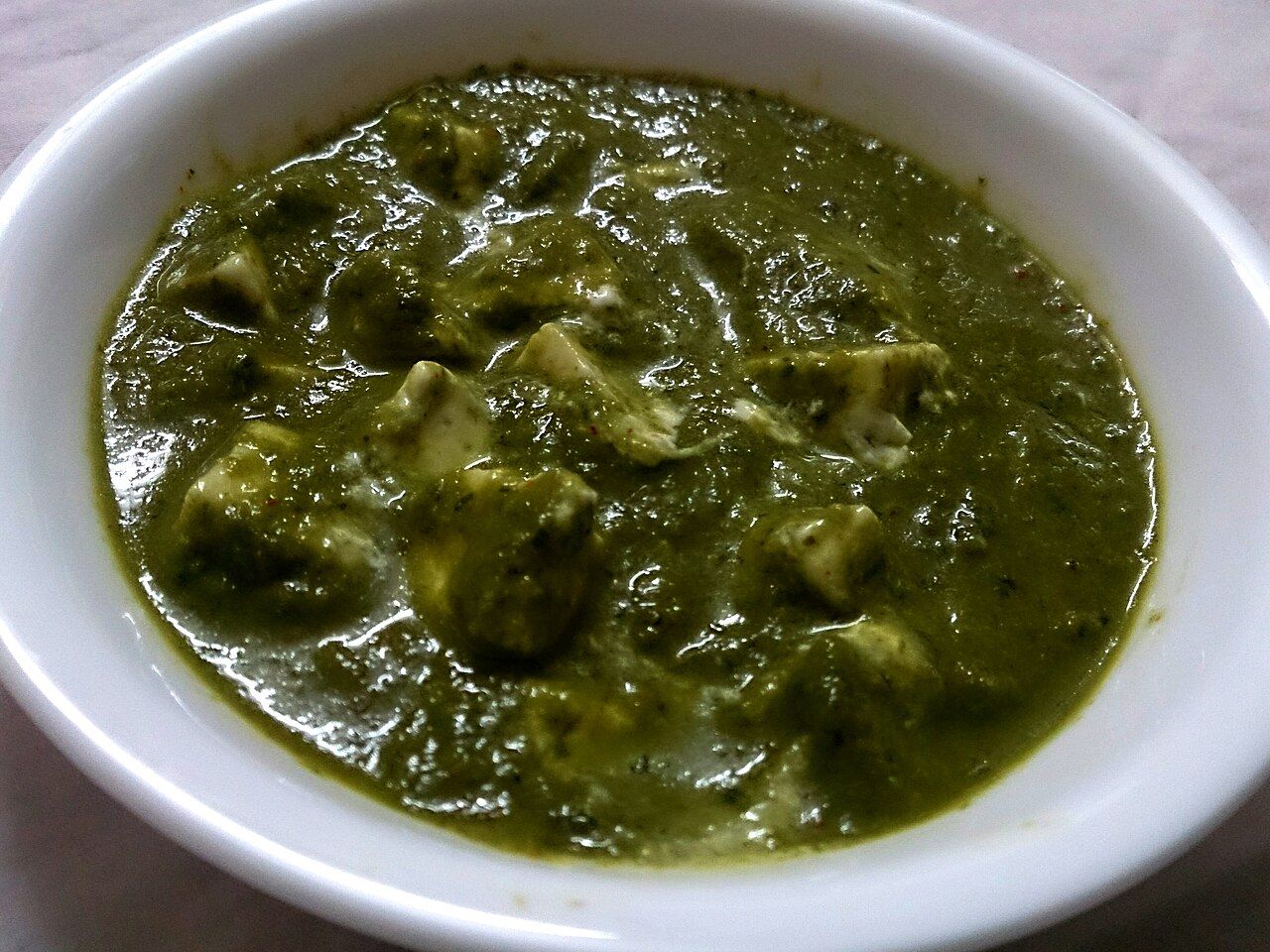
Palak Paneer
Paneer simmered in a smooth, gently spiced spinach gravy.
319 kcal13 g proteinTime:45 minVegetarianPer serving.
Punjab · Indian
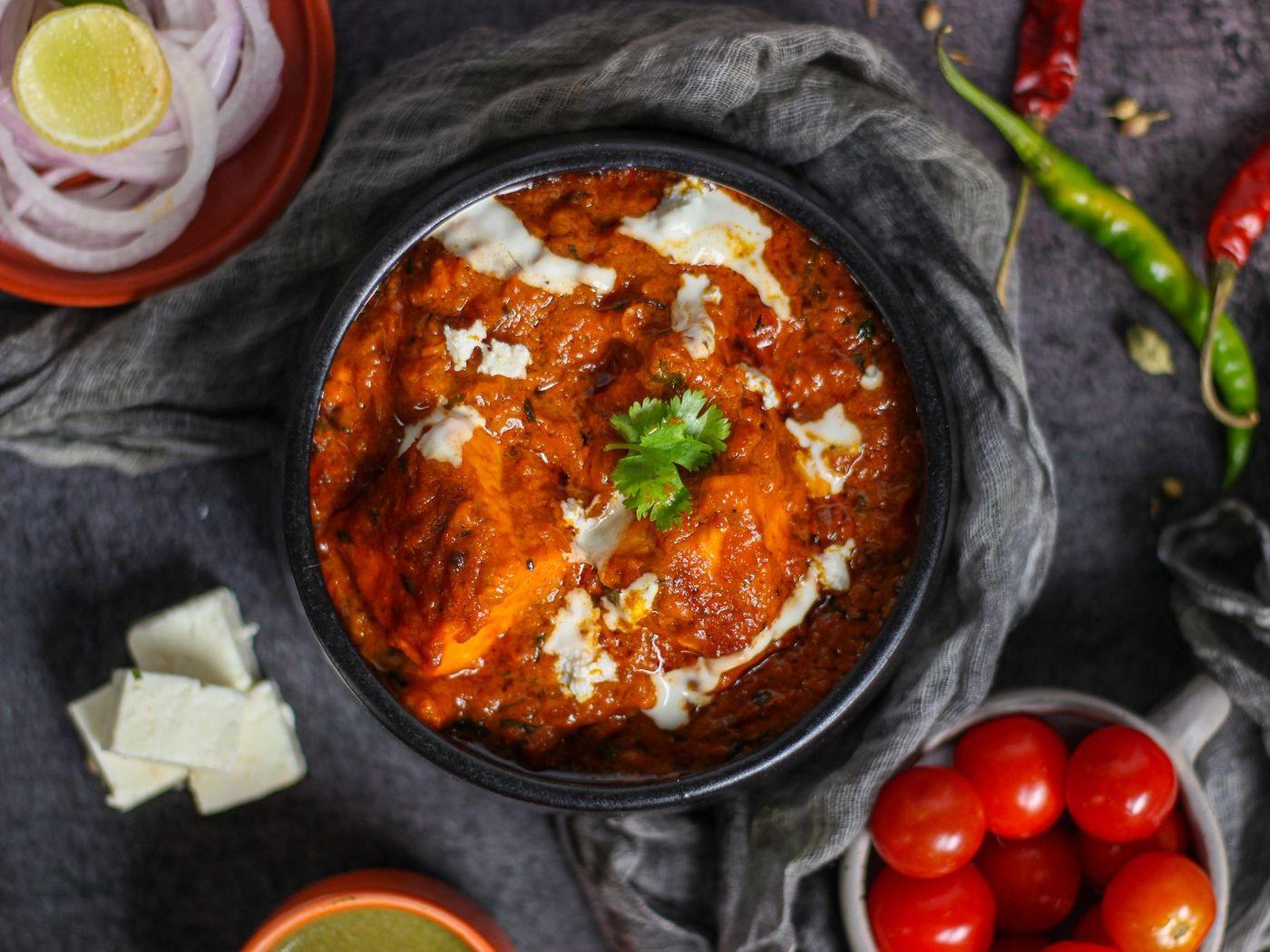
Paneer Butter Masala
Paneer in a silky, mildly sweet tomato, cashew and butter sauce.
392 kcal16 g proteinTime:45 minVegetarianPer serving.
Paneer
Chanar Dalna
West Bengal · Indian
Chanar Dalna
Bengali paneer and potato curry in mustard oil, with homemade Bengali garam masala.
398 kcal16 g proteinTime:45 minVegetarianPer serving.
Paneer
Matar Paneer
Punjab · Indian
Matar Paneer
Paneer and green peas in a spiced onion, tomato and cashew gravy.
397 kcal17 g proteinTime:45 minVegetarianPer serving.
Paneer
Methi Chaman
Kashmir · Indian
Methi Chaman
Kashmiri paneer cooked with fresh fenugreek leaves in a creamy cashew gravy.
325 kcal11 g proteinTime:40 minVegetarianPer serving.
Paneer
Paneer Bhurji
Punjab · Indian
Paneer Bhurji
Crumbled paneer scrambled with onion, tomato and spices. Ready in ten minutes.
193 kcal10 g proteinTime:20 minVegetarianPer serving.
Paneer
Paneer'er Dalna
West Bengal · Indian
Paneer'er Dalna
Bengali paneer curry with potatoes, peas and ginger, finished with ghee and gorom moshla.
257 kcal14 g proteinTime:45 minVegetarianPer serving.