Persian · Main
Zereshk Polo ba Morgh
Steamed saffron rice with tahdig, crowned with glossy buttered barberries, served with chicken braised in tomato and turmeric.
1054kcal per serving, as written
Most of it comes from rice (32%) and chicken (31%). Set your target below and we'll rescale it.
- Iran
- 2 h 55 min
- Non-Vegetarian
- mild
Adapted from a recipe by Omid Roustaei, The Caspian Chef (thecaspianchef.com)
Source and data
Adapted from “Zereshk Polo” by Omid Roustaei (The Caspian Chef (thecaspianchef.com)), accessed 2026-11-21. We use this published recipe as a reference for the dish's ingredients, proportions and technique. The method on this page is written by A Light Hand, and the original author hasn't reviewed or endorsed this adaptation. Nutrition figures are estimates, and the calorie-adjusted versions haven't been kitchen-tested. Published servings: 4.
Something off with this recipe? Tell us
How we sourced and calculated this
Region: Iran (as described by the recipe source).
How we read this recipe
- The source describes it as saffron barberry rice with chicken, a dinner-party classic.
- Four bone-in, skin-on pieces are counted as thighs, about 200 g each, at an estimated 75% edible.
- The 2 tbsp salt for parboiling is rinsed out and isn't counted. Sugar uses the midpoint, 3 tbsp.
- Barberries have no composition data in USDA or IFCT; they're counted as raisins (dried fruit of similar weight per cup), so their figure is an estimate.
Estimated weights
- Chicken thighs, bone-in with skin: 800 g bone-in, counted as 600 g edible meat (about 25% bone, estimate).
- Dried barberries (zereshk): Barberries have no composition data in USDA or IFCT; they're counted as raisins (dried fruit of similar weight per cup), so their figure is an estimate.
Data notes
- Oil, canola USDA FDC 172336, SR Legacy. Used for recipes that call for unspecified neutral cooking oil.
Nutrition reference: USDA FoodData Central (https://fdc.nal.usda.gov) and the Indian Food Composition Tables 2017 (National Institute of Nutrition, Hyderabad), retrieved 2026-11-21. Cooking losses (oil left in the pan, marinade left in the bowl) are not subtracted, so these estimates lean high. Full method and every food record.
More like this
All chicken →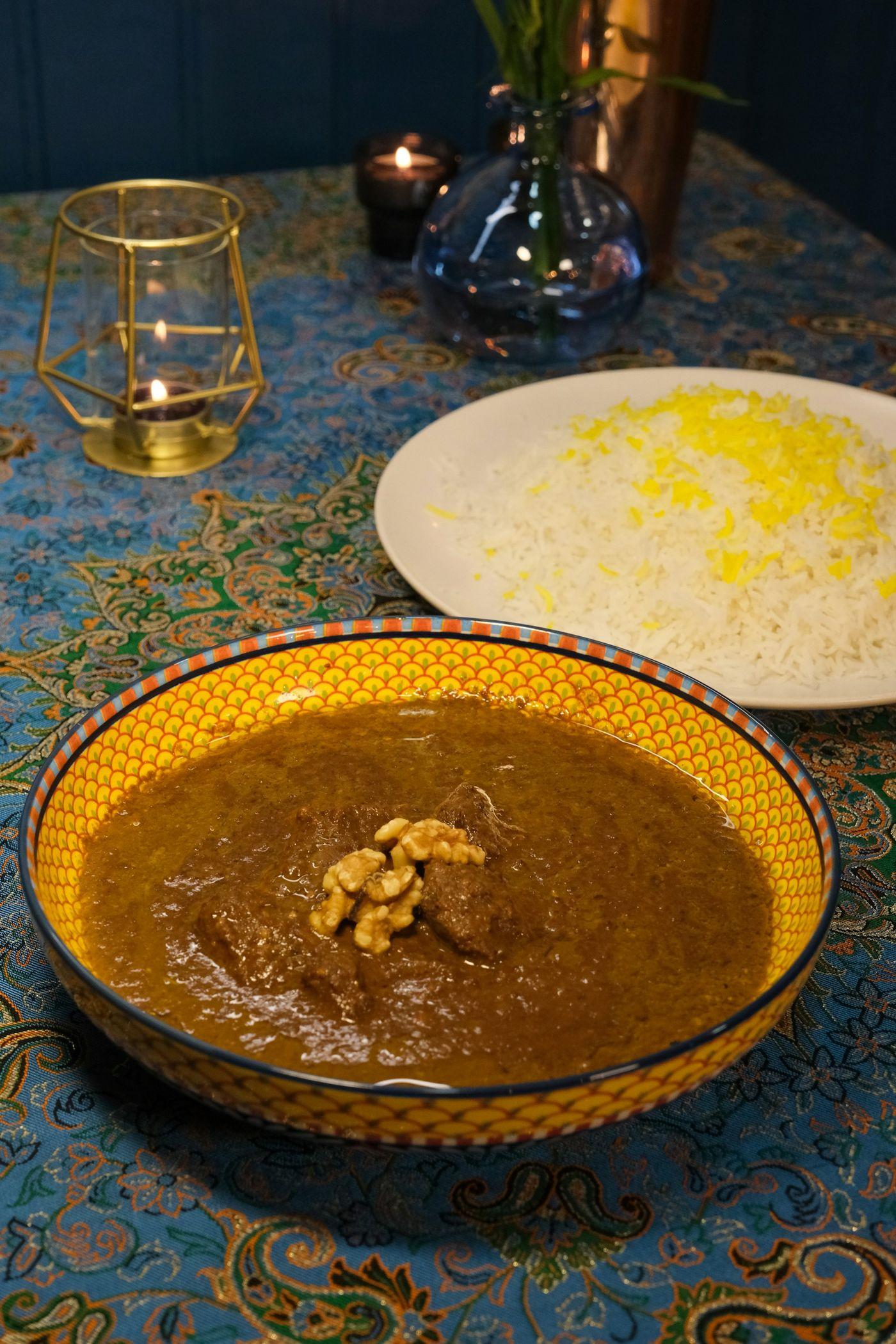
Gilan · Persian
Fesenjan
Chicken thighs braised in a dark, sweet-sour sauce of ground walnuts and pomegranate.
520 kcal25 g proteinTime:2 h 20 minNon-VegetarianPer serving.
Iran · Persian
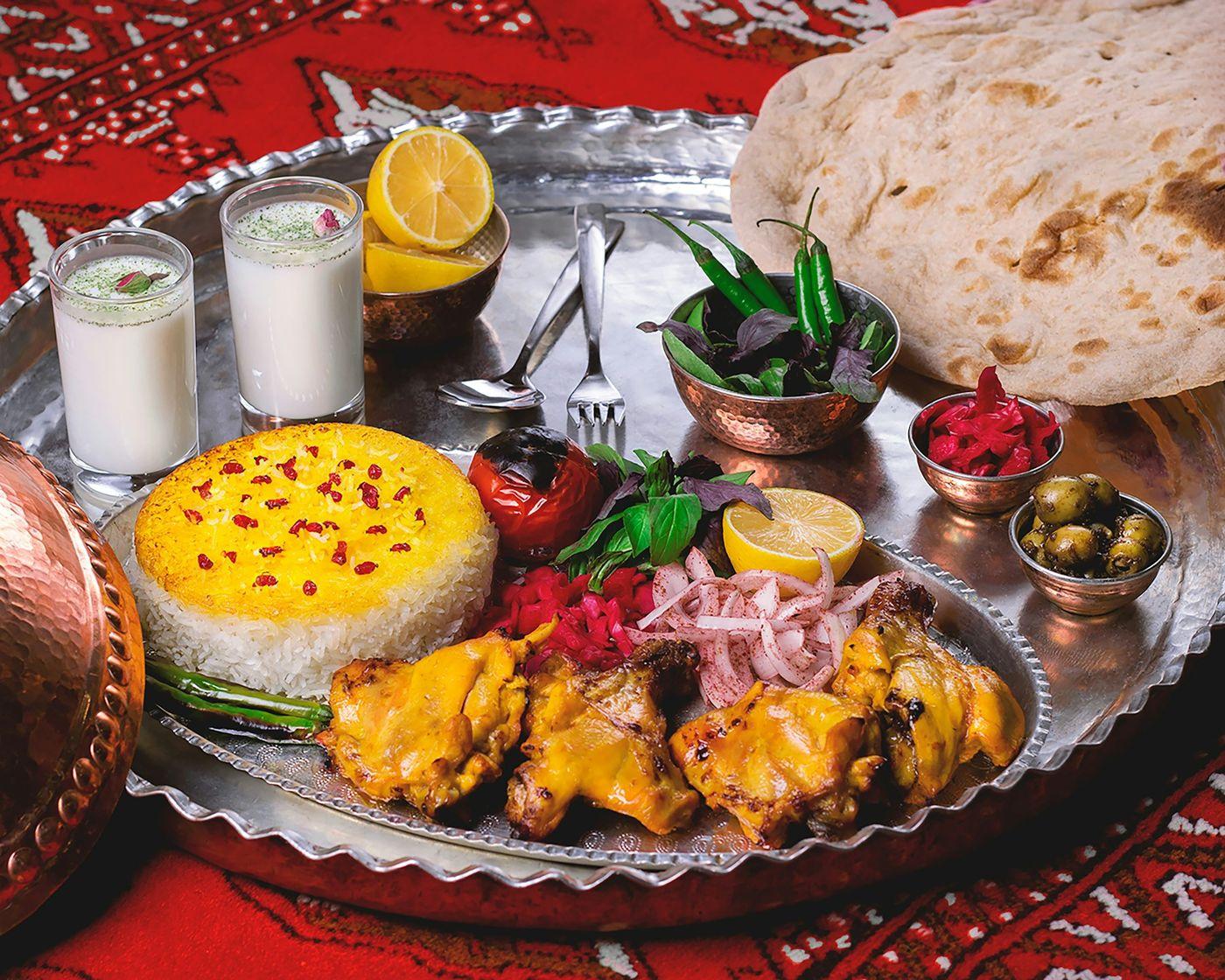
Joojeh Kabab
Persian chicken kebab, marinated in saffron, yogurt and lemon.
504 kcal57 g proteinTime:40 minNon-VegetarianPer serving.
Delhi · Indian
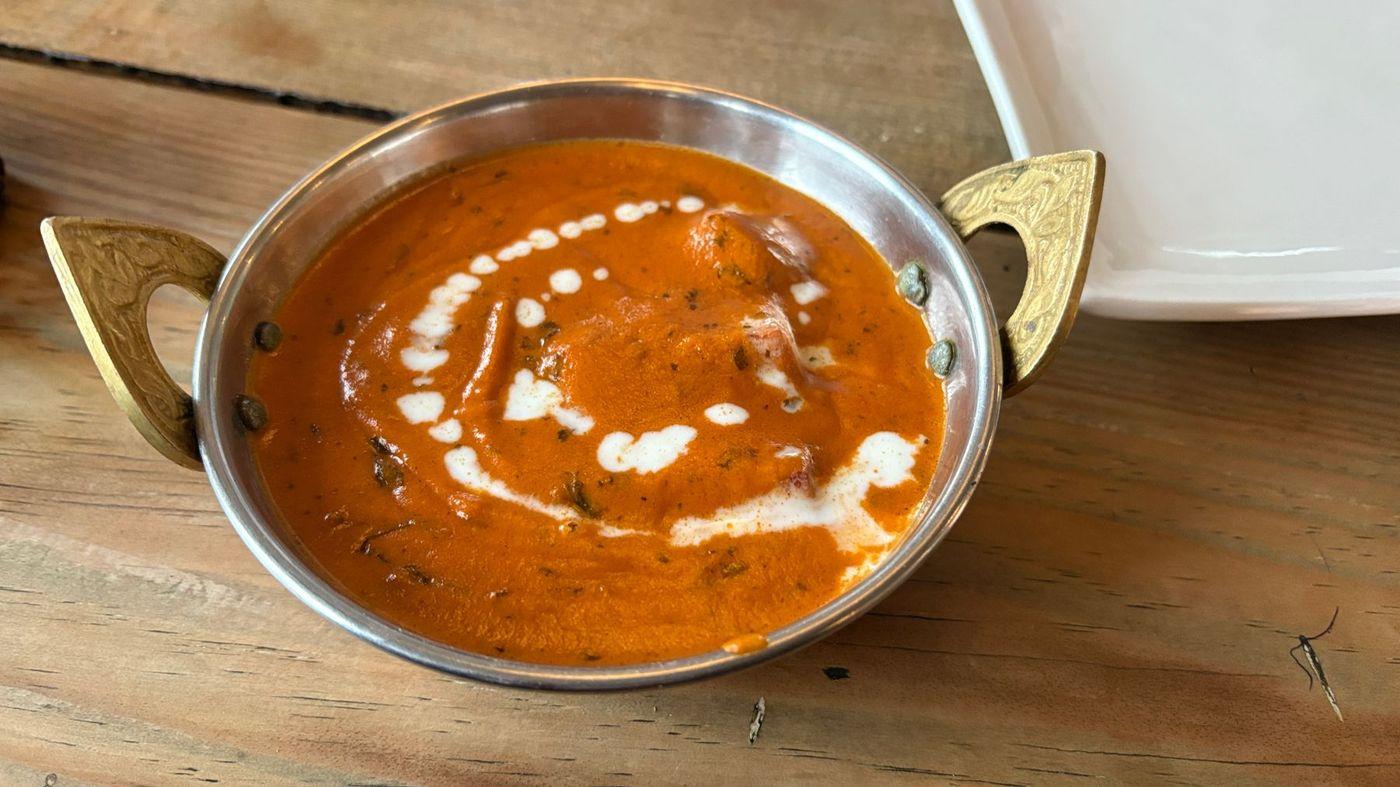
Butter Chicken
Murgh makhani: twice-marinated chicken in a buttery tomato and cashew sauce.
445 kcal33 g proteinTime:55 minNon-VegetarianPer serving.
Chicken
Morgh-e Torsh
Gilan · Persian
Morgh-e Torsh
Gilan's sour chicken braised with fried herbs, walnuts and pomegranate.
688 kcal30 g proteinTime:2 h 20 minNon-VegetarianPer serving.
Chicken
Salad Olivieh
Iran · Persian
Salad Olivieh
Iran's party potato salad: shredded chicken, potato, egg, peas, carrot and dill pickles in a mayonnaise dressing.
541 kcal26 g proteinTime:1 h 20 minNon-VegetarianPer serving.
Chicken
Tahchin-e Morgh
Iran · Persian
Tahchin-e Morgh
Saffron rice set with yogurt and egg around a layer of chicken, baked into a crisp golden cake and topped with barberries.
540 kcal19 g proteinTime:2 hNon-VegetarianPer serving.
Chicken
Chicken 65
Chennai · Indian
Chicken 65
Chennai's fiery fried chicken, tossed with garlic, curry leaves and green chilies.
495 kcal35 g proteinTime:30 minNon-VegetarianPer serving.
Chicken
Chicken Chettinad
Tamil Nadu · Indian
Chicken Chettinad
Chicken simmered with curry leaves and a freshly roasted coconut-pepper masala.
378 kcal30 g proteinTime:45 minNon-VegetarianPer serving.