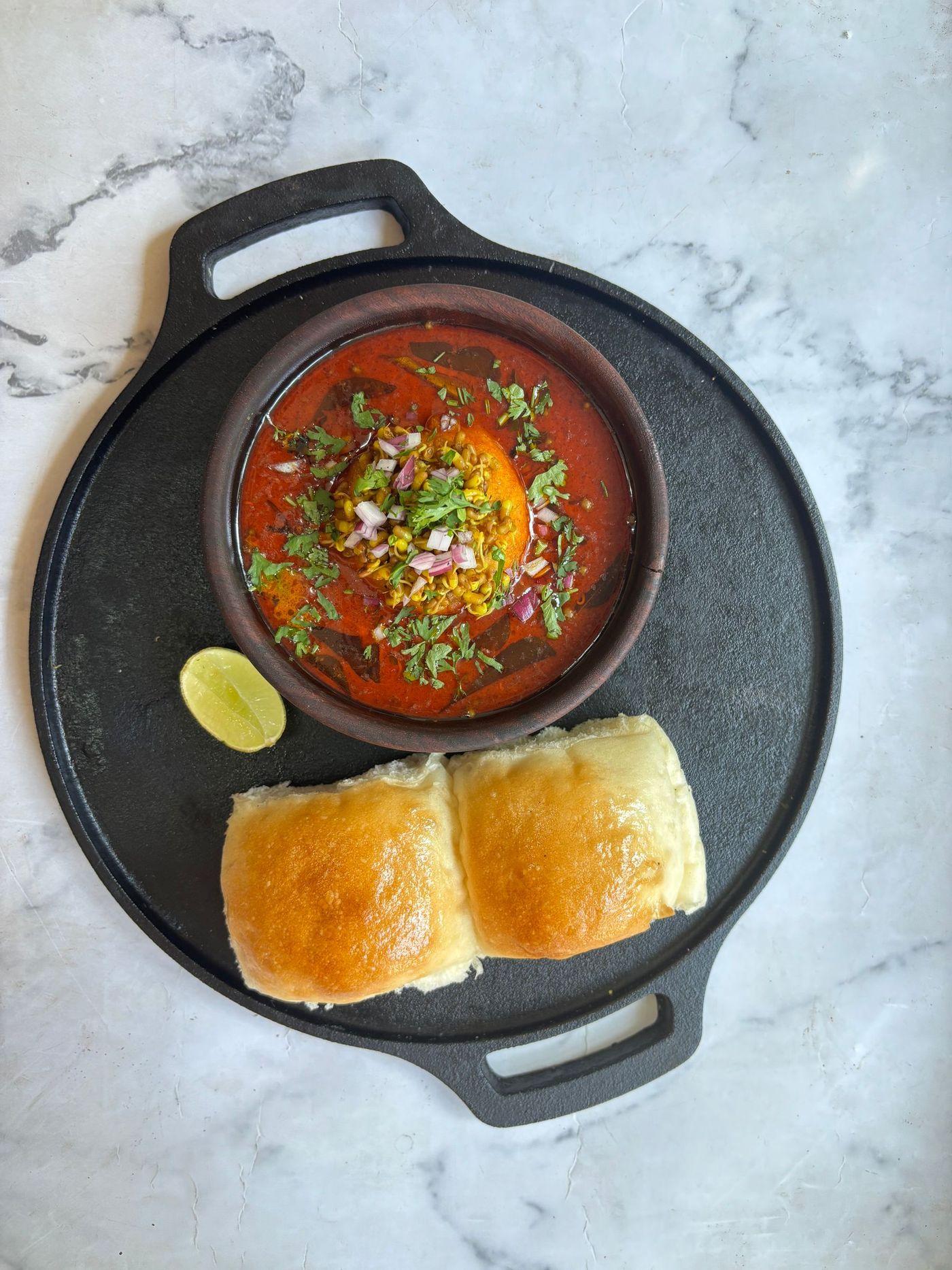
Photo: Rahul Sonawane on Pexels. Shows the dish, not this exact recipe.
Indian · Main
Misal Pav
Maharashtra's spicy sprouted moth-bean curry, topped with onion, farsan and lemon, with buttered pav.
497kcal per serving, as written
Most of it comes from pav (35%) and oil (22%). Set your target below and we'll rescale it.
- Maharashtra, West India
- 35 min + 24 h soaking
- Vegetarian
- hot
Adapted from a recipe by Swasthi Shreekanth, Swasthi's Recipes (indianhealthyrecipes.com)
Source and data
Adapted from “Misal Pav Recipe” by Swasthi Shreekanth (Swasthi's Recipes (indianhealthyrecipes.com)), accessed 2026-11-21. We use this published recipe as a reference for the dish's ingredients, proportions and technique. The method on this page is written by A Light Hand, and the original author hasn't reviewed or endorsed this adaptation. Nutrition figures are estimates, and the calorie-adjusted versions haven't been kitchen-tested. Published servings: 4.
Something off with this recipe? Tell us
How we sourced and calculated this
The publisher lists 880 kcal and 40 g protein (per serving, as published). Our figures are recalculated from USDA reference data and may differ.
Region: Maharashtra, West India (as described by the recipe source).
How we read this recipe
- The source calls misal pav a popular Maharashtrian street food. Filed as a main: in this app breakfasts sit with mains.
- Matki sprouts are counted as their dry weight (½ cup moth beans, IFCT 2017). Misal masala is counted as garam masala (estimate). Ranges use midpoints.
- The farsan topping has no composition data and isn't counted, so the real figure is higher. The source's published figure looks high for these amounts.
Estimated weights
- Matki (moth bean) sprouts: 0.5 × 192 g per cup (dry moth beans, about 192 g per cup) (estimate).
- Mustard seeds: 0.75 × 3 g per tsp (whole mustard seed) (estimate).
- Curry leaves: 15 × 0.1 g per curry leaf (a single curry leaf) (estimate).
- Fresh ginger: 1 × 10 g per inch ginger (a 1-inch piece of fresh ginger) (estimate).
- Desiccated coconut: 2 × 80 g per cup (FDC 170170) (estimate).
- Misal or goda masala: No composition data for misal masala; counted as garam masala.
- Jaggery (optional): 1 × 12 g per tbsp (grated jaggery, about 12 g per tablespoon) (estimate).
- Lemon juice: One lemon, about 3 tablespoons of juice (estimate).
Data notes
- Moth bean IFCT 2017, code B016. From the Indian Food Composition Tables 2017 (National Institute of Nutrition, Hyderabad), read from the ifct2017 data package's transcription. IFCT reports energy in kJ; converted at 4.184 kJ per kcal. Check against the printed tables before commercial use.
- Oil, canola USDA FDC 172336, SR Legacy. Used for recipes that call for unspecified neutral cooking oil.
- Mustard seeds IFCT 2017, code H013. From the Indian Food Composition Tables 2017 (National Institute of Nutrition, Hyderabad), read from the ifct2017 data package's transcription. IFCT reports energy in kJ; converted at 4.184 kJ per kcal. Check against the printed tables before commercial use.
- Spices, cumin seed USDA FDC 170923, SR Legacy. Also used for ground cumin. USDA's teaspoon weight is for whole seed.
- Curry leaves IFCT 2017, code G010. From the Indian Food Composition Tables 2017 (National Institute of Nutrition, Hyderabad), read from the ifct2017 data package's transcription. IFCT reports energy in kJ; converted at 4.184 kJ per kcal. Check against the printed tables before commercial use.
- Spices, pepper, red or cayenne USDA FDC 170932, SR Legacy. Proxy for Kashmiri red chili powder, which has no USDA entry. Both are ground dried Capsicum; heat differs, energy is assumed similar.
- GARAM MASALA (Sands Impex) USDA FDC 2525305, Branded. Spice blends vary by brand; SR Legacy has no garam masala entry.
- Jaggery, cane IFCT 2017, code I001. From the Indian Food Composition Tables 2017 (National Institute of Nutrition, Hyderabad), read from the ifct2017 data package's transcription. IFCT reports energy in kJ; converted at 4.184 kJ per kcal. Check against the printed tables before commercial use.
Nutrition reference: USDA FoodData Central (https://fdc.nal.usda.gov) and the Indian Food Composition Tables 2017 (National Institute of Nutrition, Hyderabad), retrieved 2026-11-21. Cooking losses (oil left in the pan, marinade left in the bowl) are not subtracted, so these estimates lean high. Full method and every food record.