Indian · Main
Chole Bhature
Punjabi chickpea curry with a ground onion-tomato masala and amchur, served with soft, puffed, deep-fried bhature.
704kcal per serving, as written
Most of it comes from chickpeas (27%) and bhature flour (24%). Set your target below and we'll rescale it.
- Punjab and Delhi, North India
- 1 h 10 min + 8 h soaking
- Vegetarian
- medium
Adapted from a recipe by Dassana Amit, Veg Recipes of India (vegrecipesofindia.com)
Source and data
Adapted from “Chole Bhature | Chana Bhatura” by Dassana Amit (Veg Recipes of India (vegrecipesofindia.com)), accessed 2026-11-21. We use this published recipe as a reference for the dish's ingredients, proportions and technique. The method on this page is written by A Light Hand, and the original author hasn't reviewed or endorsed this adaptation. Nutrition figures are estimates, and the calorie-adjusted versions haven't been kitchen-tested. Published servings: not stated.
Something off with this recipe? Tell us
How we sourced and calculated this
Region: Punjab and Delhi, North India (as described by the recipe source).
How we read this recipe
- The author calls it a popular choice for breakfast or brunch across North India. Filed as a main: in this app breakfasts sit with mains.
- The card gives no servings; we count 4 for 1 cup dried chickpeas and about 12 bhature.
- Whole spices, baking soda and baking powder aren't counted. No composition data for amchur (dried mango powder); a few kcal. The oil for deep-frying isn't eaten in full. We count what the food absorbs, estimated at 10% of the wet batter weight (anchored to USDA's home-prepared falafel); it's marked as an estimate on the ingredient.
Estimated weights
- Fresh ginger: 1 × 10 g per inch ginger (a 1-inch piece of fresh ginger) (estimate).
- Green chilies: 2 × 5 g per green chili (small Indian green chili) (estimate).
- Garam masala: 1 × 2 g per tsp (FDC 2525305) (estimate).
- Oil for deep-frying (amount absorbed): Oil absorbed while deep-frying, estimated at 10% of the wet batter weight (about 406 g here, soaked dal counted at twice its dry weight). USDA's home-prepared falafel (FDC 172455), a deep-fried soaked-legume batter like a vada, is 17.8 g fat per 100 g against about 4 g in the raw mix, and loses about a third of its weight as water in the fryer: roughly 10 g of oil absorbed per 100 g of wet batter. Real uptake varies with oil temperature and batter moisture.
Data notes
- Oil, canola USDA FDC 172336, SR Legacy. Used for recipes that call for unspecified neutral cooking oil.
- Spices, pepper, red or cayenne USDA FDC 170932, SR Legacy. Proxy for Kashmiri red chili powder, which has no USDA entry. Both are ground dried Capsicum; heat differs, energy is assumed similar.
- Spices, coriander seed USDA FDC 170922, SR Legacy. Used for coriander powder.
- GARAM MASALA (Sands Impex) USDA FDC 2525305, Branded. Spice blends vary by brand; SR Legacy has no garam masala entry.
- Yogurt, plain, whole milk USDA FDC 171284, SR Legacy. Used for Indian curd (dahi).
Nutrition reference: USDA FoodData Central (https://fdc.nal.usda.gov) and the Indian Food Composition Tables 2017 (National Institute of Nutrition, Hyderabad), retrieved 2026-11-21. Cooking losses (oil left in the pan, marinade left in the bowl) are not subtracted, so these estimates lean high. Full method and every food record.
More like this
All chickpeas →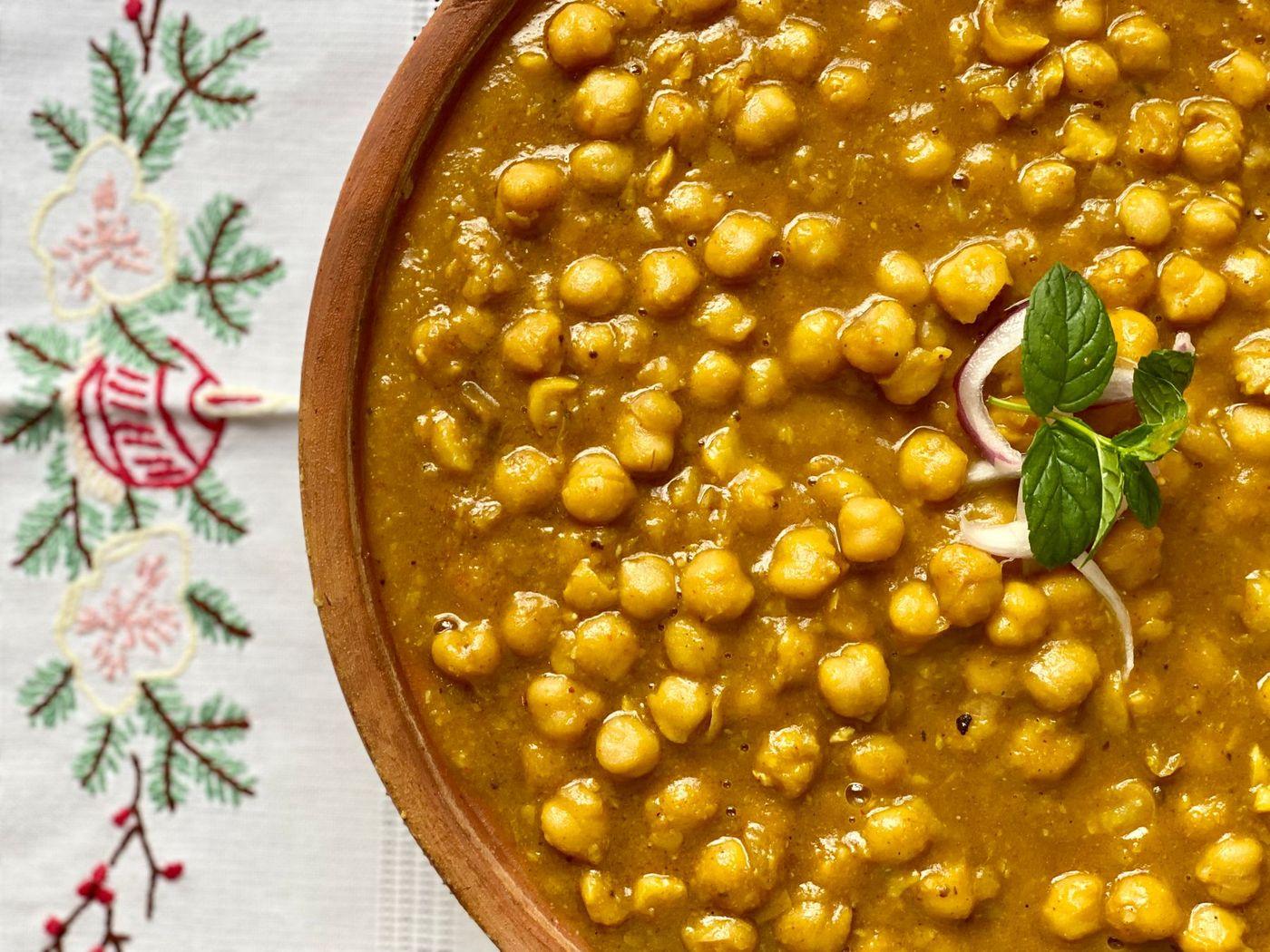
Punjab · Indian
Chana Masala
Chickpeas simmered in a deep, tangy onion and tomato masala.
298 kcal12 g proteinTime:50 minVeganPer serving.
Chickpeas
Amritsari Chole
Punjab · Indian
Amritsari Chole
Amritsar's chickpea curry: tea-darkened chana in a caramelised onion masala.
357 kcal15 g proteinTime:1 hVeganPer serving.
Chickpeas
Besan Chilla
North India · Indian
Besan Chilla
Quick gram-flour pancakes with onion, tomato, chili, ginger, ajwain and coriander.
174 kcal6 g proteinTime:20 minVeganPer serving.
Chickpeas
Chana Gassi
Karnataka · Indian
Chana Gassi
Mangalorean chickpeas in a roasted coconut, coriander and tamarind sauce.
197 kcal9 g proteinTime:1 hVeganPer serving.
Chickpeas
Chana Palak
Punjab · Indian
Chana Palak
Chickpeas simmered with fresh spinach in a spiced onion and tomato masala.
340 kcal12 g proteinTime:1 hVeganPer serving.
Chickpeas
Chana Sundal
Tamil Nadu · Indian
Chana Sundal
Tamil temple-style chickpeas tossed with mustard seeds, curry leaves and fresh coconut.
269 kcal11 g proteinTime:30 minVeganPer serving.
Chickpeas
Fafda
Gujarat · Indian
Fafda
Gujarat's crisp ribbons of besan dough with ajwain and black pepper, fried for the Sunday fafda-jalebi breakfast.
157 kcal5 g proteinTime:45 minVeganPer serving.
Chickpeas
Gatte ki Sabzi
Rajasthan · Indian
Gatte ki Sabzi
Spiced besan logs, boiled then simmered in a tangy curd gravy; desert cooking without fresh vegetables.
270 kcal8 g proteinTime:50 minVegetarianPer serving.