Indian · Appetizer / Main
Chicken Farcha
Parsi celebration fried chicken: spiced thighs dipped in egg and crumbs, fried golden.
410kcal per serving, as written
Most of it comes from chicken (37%) and breadcrumbs (26%). Set your target below and we'll rescale it.
- Parsi (Gujarat and Mumbai), West India
- 28 min + 8 h marinating
- Non-Vegetarian
- mild
Adapted from a recipe by Yummefy, Yummefy (yummefy.com)
Source and data
Adapted from “Chicken Farcha (Marghi na Farcha)” by Yummefy (Yummefy (yummefy.com)), accessed 2026-11-21. We use this published recipe as a reference for the dish's ingredients, proportions and technique. The method on this page is written by A Light Hand, and the original author hasn't reviewed or endorsed this adaptation. Nutrition figures are estimates, and the calorie-adjusted versions haven't been kitchen-tested. Published servings: 4 (as part of a larger meal).
Something off with this recipe? Tell us
How we sourced and calculated this
Region: Parsi (Gujarat and Mumbai), West India (as described by the recipe source).
How we read this recipe
- The source describes farcha as the Parsi fried chicken served at almost every celebration, including the lagan nu bhonu (wedding feast). It adapts the Time and Talents Club's 'A Treasury of Great Recipes'.
- Chicken is counted as boneless thigh (FDC 173627).
- The oil for deep-frying isn't eaten in full. We count what the food absorbs, estimated at 10% of the wet batter weight (anchored to USDA's home-prepared falafel); it's marked as an estimate on the ingredient. Here it's applied to the egg and crumb coating.
- Clove and cinnamon powder, vinegar and Worcestershire sauce aren't counted.
Estimated weights
- Green chili paste: 0.5 × 5 g per tsp (about one green chili) (estimate).
- Oil for deep-frying (amount absorbed): Oil absorbed while deep-frying, estimated at 10% of the wet batter weight (about 258 g here, soaked dal counted at twice its dry weight). USDA's home-prepared falafel (FDC 172455), a deep-fried soaked-legume batter like a vada, is 17.8 g fat per 100 g against about 4 g in the raw mix, and loses about a third of its weight as water in the fryer: roughly 10 g of oil absorbed per 100 g of wet batter. Real uptake varies with oil temperature and batter moisture.
Data notes
- Spices, cumin seed USDA FDC 170923, SR Legacy. Also used for ground cumin. USDA's teaspoon weight is for whole seed.
- Oil, canola USDA FDC 172336, SR Legacy. Used for recipes that call for unspecified neutral cooking oil.
Nutrition reference: USDA FoodData Central (https://fdc.nal.usda.gov) and the Indian Food Composition Tables 2017 (National Institute of Nutrition, Hyderabad), retrieved 2026-11-21. Cooking losses (oil left in the pan, marinade left in the bowl) are not subtracted, so these estimates lean high. Full method and every food record.
More like this
All chicken →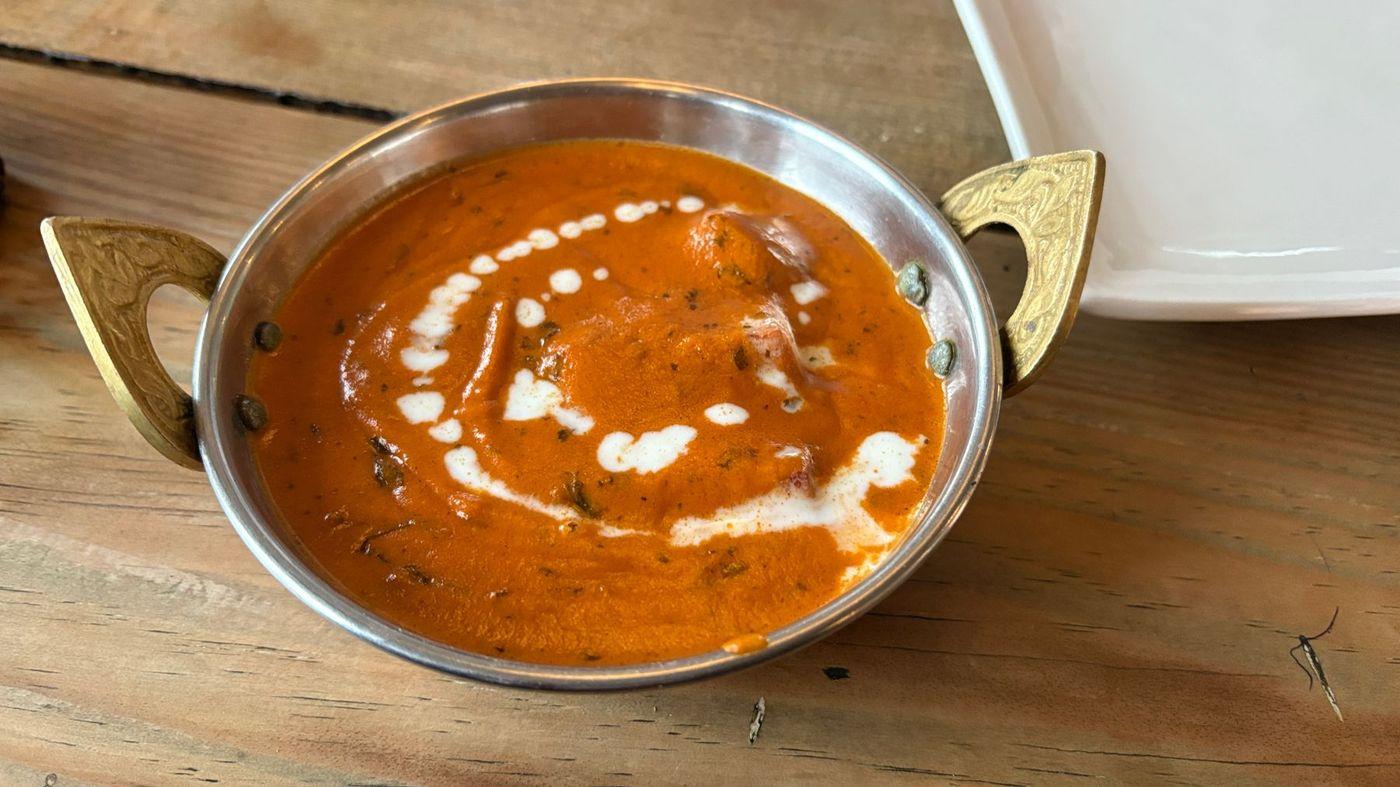
Delhi · Indian
Butter Chicken
Murgh makhani: twice-marinated chicken in a buttery tomato and cashew sauce.
445 kcal33 g proteinTime:55 minNon-VegetarianPer serving.
Punjab · Indian
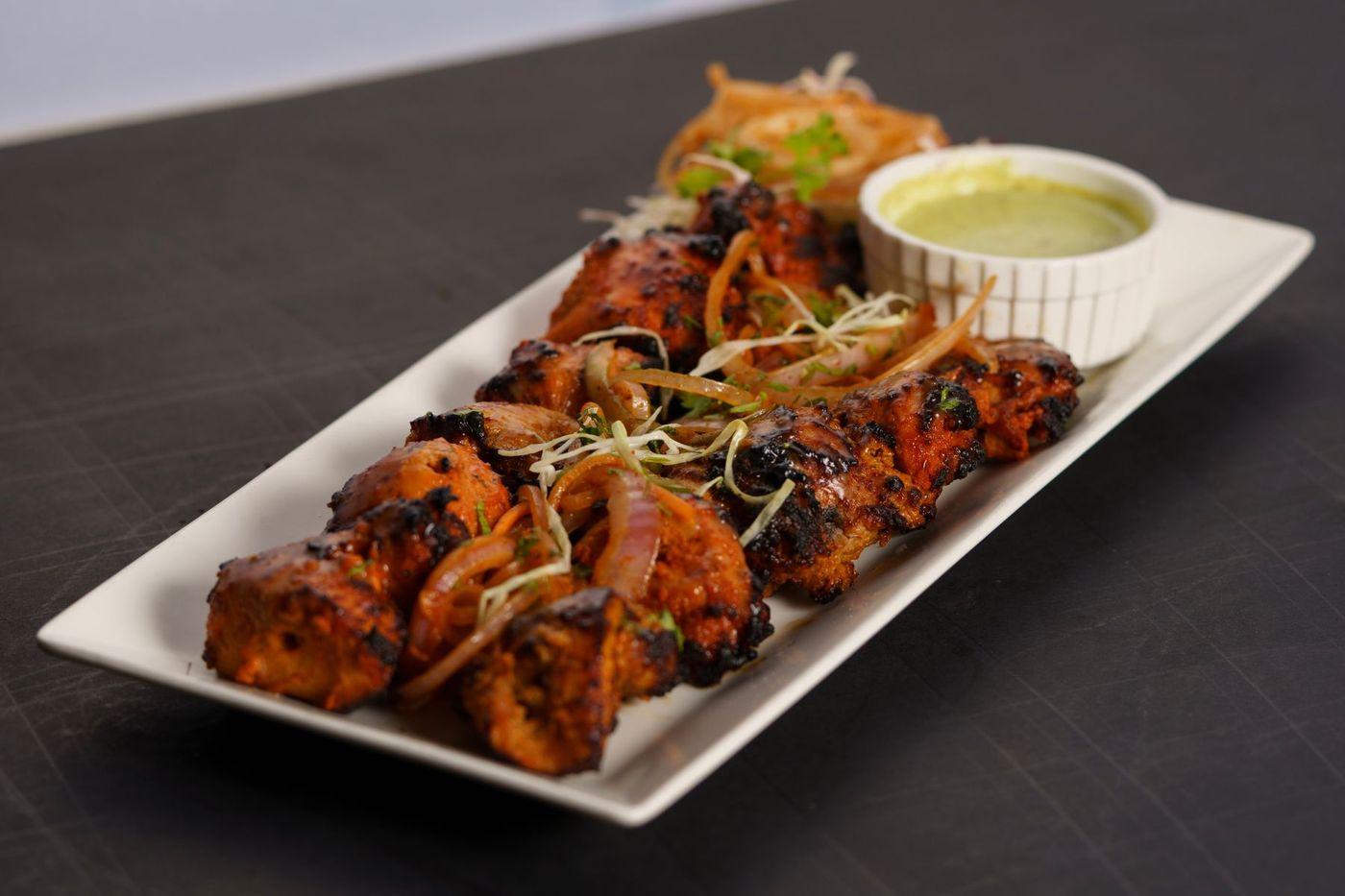
Chicken Tikka
Yogurt-marinated chicken kebabs, roasted hot and brushed with butter.
251 kcal28 g proteinTime:35 minNon-VegetarianPer serving.
Chicken
Chicken 65
Chennai · Indian
Chicken 65
Chennai's fiery fried chicken, tossed with garlic, curry leaves and green chilies.
495 kcal35 g proteinTime:30 minNon-VegetarianPer serving.
Chicken
Chicken Chettinad
Tamil Nadu · Indian
Chicken Chettinad
Chicken simmered with curry leaves and a freshly roasted coconut-pepper masala.
378 kcal30 g proteinTime:45 minNon-VegetarianPer serving.
Chicken
Chicken Ghee Roast
Kundapur and Mangalore · Indian
Chicken Ghee Roast
Mangalorean chicken roasted in ghee and a fiery, tangy byadgi chili masala.
318 kcal21 g proteinTime:40 minNon-VegetarianPer serving.
Chicken
Chicken Kolhapuri
Maharashtra · Indian
Chicken Kolhapuri
Kolhapur's fiery chicken in a roasted coconut, sesame and poppy-seed masala.
402 kcal30 g proteinTime:1 hNon-VegetarianPer serving.
Chicken
Chicken Kosha
Bengal · Indian
Chicken Kosha
Bengali chicken slow-braised in mustard oil until the masala clings.
325 kcal25 g proteinTime:1 hNon-VegetarianPer serving.
Chicken
Chicken Xacuti
Goa · Indian
Chicken Xacuti
Goa's festive curry of chicken in a dark roasted-coconut masala.
214 kcal16 g proteinTime:1 h 30 minNon-VegetarianPer serving.